

Turning Strategy into Action – Why Execution Breaks Down in Leadership Teams
09 / Jun / 2026
The Real Reason Strategy Fails Most leadership teams don’t fail because they lack strategy. They fail because, over time, execution becomes diluted. Priorities blur. Accountability softens. Decisions that felt clear in the boardroom lose momentum once the pressure of the day‑to‑day takes over. For owners, founders and senior leaders, this can be one of the […]
Craig Elvin
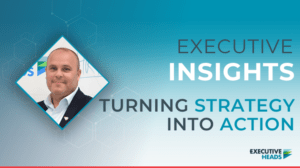
The Real Reason Strategy Fails
Most leadership teams don’t fail because they lack strategy.
They fail because, over time, execution becomes diluted. Priorities blur. Accountability softens. Decisions that felt clear in the boardroom lose momentum once the pressure of the day‑to‑day takes over.
For owners, founders and senior leaders, this can be one of the most frustrating aspects of running a business, knowing what needs to change, but struggling to turn that intent into consistent action across the leadership team.
This is the challenge behind Turning Strategy into Action, a business leaders’ breakfast designed to explore why execution so often breaks down at the top of organisations, and what high‑performing leadership teams do differently.
We spoke with Damien Koziol of The Alternative Board ahead of the event about why this issue is so prevalent and why the real leverage for change sits firmly with senior leadership.
Why Execution Breaks Down at the Top (Q&A with Damien Koziol)
Craig: Damien, we speak to a lot of owners and senior leaders who are confident in their strategy but less confident in the outcomes they’re seeing. Why is that such a common frustration?
Damien: Because strategy is rarely the real issue. Most leadership teams know what needs to change and where the business needs to go. The problem is what happens after those decisions are made. Alignment drifts, ownership becomes unclear, and execution competes with the day‑to‑day pressures of running the business.
Craig: So it’s not a lack of ambition or capability?
Damien: Not at all. In fact, this tends to show up most in capable, ambitious businesses. Leaders care deeply about results, but they’re operating in complex environments, growth, people challenges, market uncertainty, and stakeholder expectations. Without a clear structure that connects strategy to how the senior team actually works together, good intent doesn’t always translate into consistent action.
Craig: We often hear, “We agreed it, but it didn’t happen.” What’s usually sitting underneath that?
Damien: A few things. Priorities that aren’t as clear as people think. Ownership that’s assumed rather than explicit. And a belief that alignment exists because everyone was in the room. Senior teams often underestimate how much clarity, focus and repetition are required to keep execution on track over time.
Craig: And when that breaks down at the top, the impact is felt everywhere.
Damien: Exactly. Execution issues aren’t usually caused by a lack of effort lower down the organisation. They’re a reflection of what the leadership team signals through its behaviour, focus and decision‑making. If there’s ambiguity or drift at the top, it cascades very quickly.
Creating Better Execution Through Leadership Alignment
Craig: That’s really the reason for this event. What prompted you to create a session specifically for owners, MDs and senior leaders?
Damien: Because this is where the leverage is. If you want better execution across the business, you have to start with how the senior team operates. This session is about helping leaders step back and look honestly at how strategy is translated into priorities, actions and accountability at the top of the organisation.
Craig: And this isn’t a traditional strategy workshop.
Damien: No. It’s not about creating a new strategy or adding another document to the shelf. We introduce the StratPro framework, which is designed to bridge the gap between strategy and productivity and enable turning strategy into action. It focuses on the practical disciplines that high‑performing leadership teams use to maintain clarity, alignment and momentum.
Craig: How would you describe the format?
Damien: It’s a working, conversational session. Small numbers, senior peers, and space to think clearly. We explore real leadership dynamics rather than theory, how priorities are set, how decisions are followed through, and how accountability is created without bureaucracy.
Craig: Who do you think will get the most value from attending?
Damien: Owners, founders, MDs, CEOs and senior leaders who feel accountable for outcomes across people, culture and commercial performance. Particularly those who sense their business has more potential than is currently being realised. If you have a capable team and a clear ambition, but execution isn’t as consistent as you’d like, this will resonate.
Craig: And what do you hope people leave with at the end of the morning?
Damien: Clarity. Not a thick strategy document, but sharper thinking about what really matters now, who owns what, and how their leadership team works together. Something practical they can take back into the business and start applying immediately.
Event details
Business Leaders’ Breakfast: Turning Strategy into Action
- Date: Thursday 25 June
- Time: 8:00am – 9:30am
- Location: Burlington House, Hedge End, SO30 2AF
- Cost: Free (places are limited)
- Format: Breakfast and facilitated working session
If you’re serious about improving how strategy is executed in your business, not just discussed, you can find full details and register your interest here.
Places are limited, and attendance will be confirmed ahead of the event.
Latest Blogs
Leadership Communication: The Leadership Skill That Matters Most When Change Is Constant
Why Most Executive Interviews Fail – And the Cost Is Far Greater Than You Think
Upcoming Events
Executive to NED: Making the Move
18 / Sep / 2025
How to Build a More Valuable Business: The 8 Drivers That Increase Your Multiple
26 / Mar / 2026
Business Leaders Event: Turning Strategy into Action
25 / Jun / 2026
Creating a High-Impact Executive CV
14 / Aug / 2026

© 2026 EXECUTIVE HEADS
All rights reserved. Heads Resourcing Ltd.
Registered address: Fleming Court Leigh Road, Eastleigh, Southampton, Hampshire, SO50 9PD
Terms of use | Privacy Policy
Design by Pogo. Created By Arc.