

Head 2 Head: Russell Ward
15 / Jan / 2020
In the second of our Head 2 Head series, Craig Elvin caught up with Non-Executive Director Russell Ward.
Russell spoke about his career, life as a Non-Executive Director and his passion for sailing.
By: Craig Elvin
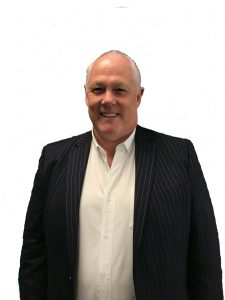
Russell Ward, Non-Executive Director
What did you do throughout your career to get to your position as Non-Executive Director?
From a very early age, it was always one of my ambitions to end up running a business.
I guess that my education and the work choices I’ve made over the years have given me a breadth of understanding of different areas of business.
Having started out as a Commercial Trainee on Marconi Radar’s graduate programme, I was exposed to a lot of areas of a very professional business.
I wanted to get more into the sales and marketing side, which I wasn’t getting in a defence business then.
As a 20-year old, I wasn’t allowed to sell weapons systems, so I found a sales role, which I was offered at first interview by the Marketing Director.
I thought it is quite good and realised I was quite successful at selling, but, ultimately, I wanted to run a business.
That opportunity came in my mid-20s when the company I was working for as Sales Manager was acquired by an American oil and gas group, which was acquiring electronic businesses.
I was offered the chance of joining them as Sales Director; it was an exciting opportunity with a NASDAQ-listed PLC.
Very quickly I gained exposure to American business culture and international growth.
When I look back on my career, I guess that’s really been the bedrock.
I got the foundations and understanding of business.
While I was working, I undertook a degree in Accountancy and Marketing.
I could’ve studied full-time, but decided to do it the hard way as my big passion is sailing.
Back then it was an amateur sport, so I had to pay for it.
I really burnt the candle at both ends in those days!
So that gave you engineering, sales and finance experience?
Getting a good grounding across the business and being able to understand all the different facets of it was an almost deliberate plan really.
By the time I was 27, I had exposure to the technical, commercial or financial functions, including at a very big PLC in GEC.
Circumstances happened and because I really understood all of these aspects of the business, and was linked in with the clients and understood what we were doing, I had the opportunity to become the Managing Director of a subsidiary of the American business.
Naively, aged 27, I took it with both hands.
When I look back now I realise I didn’t know a lot of stuff about running a business and what’s required.
You don’t know what you don’t know.
The main thing was that I had the basics and was able to build the business for them.
I’ve been very successful at driving growth at the companies I’ve gone on to work for, ultimately driving efficiency and the balance sheet – not just the profit and loss.
There’s the old mantra that cash is king, but you need to understand the levers you can pull.
Unfortunately, in 1999 my wife died of cancer.
I was running a global business in the packaging industry, travelling six months a year and had two small boys to raise.
I decided to take a year off.
It gave me time to step back, get my life in order and think about what I wanted to do.
Did it give you some perspective?
Absolutely.
It also moves you into a position where maybe some of the things you might have suffered in the past, you don’t suffer going forward.
Once you get through the grief, it brings a little more clarity around things.
I’ve successfully done that, I eventually remarried and moved forward.
In terms of the work situation, I joined a fairly small process engineering business and very successfully grew the business for them.
I then really wanted to get back on the world stage.
A turnaround opportunity came along with Motherwell Bridge, a global engineering business based in Scotland.
It built oil terminals, tanks, sections for submarines and was a really heavy engineering business made up of about 50 different companies.
In about 2003 it got itself into serious trouble and owed the bank a significant amount of money.
Hugh Hayes, a turnaround guide, undertook some of the initial surgery that needed doing.
I joined in 2007 to continue the journey of sorting out the group and ultimately to take over as CEO and drive the growth with a view to exiting for the owners.
Once we sorted out the initial fires, we sold the group to a London Private Equity Group, which supported the business through the next phase of its turnaround.
Not only had I done growth throughout my career, but I became quite adept at turnarounds, taking companies that weren’t going anywhere and making something of them.
Motherwell Bridge was a real back to the wall financial issue, and at one stage, when the 2008 crash occurred, we were leveraged at something like 20/1.
That was squeaky bum time.
Did you sleep much at that time?
I’ve slept reasonably well most of my life but there were a few nights when I’d wake up.
Had I been a 25-year old MD I would never have known how to do this sort of thing.
We had to pull so many levers to get ourselves out of that situation.
We talked to our shareholders and got debt converted into equity, we talked to our clients and got better commercial terms.
We were really quite tough commercially, but fair.
We took businesses that really weren’t right for us, sold them on to get cash into the business and retained relationships for five years, which gave us access to the products.
We were really having to work smart about a lot of things.
Then, of course, it was driving our own work in progress, managing the balance sheet and not just the profit and loss.
It’s great making lots of profit, but you’ve got to turn it into cash – and quickly.
Whether it’s a turnaround, or just a business generally, that’s the sort of mantra I now have as a Chairman.
It doesn’t matter if the business has cash in the bank or not, I still want it to have a good practice.
We should be deploying good commercial, financial and sales practice, whatever it is.
We should make the business as efficient as possible because that’s the best thing for the stakeholders.
It’s not just about shareholders – yes that’s important – but one of the big things is obviously a successful business that is sustainable.
Businesses shouldn’t necessarily be going through the rollercoaster they’re going through.
Nowadays people are very much pigeonholed, do you think you could’ve done what you’ve done if you were starting today?
I think it would be very hard if I was pigeonholed.
I’ll only go into businesses if I think I can add some value, and one of the things I say to people when I do is, ‘I can’t walk on water, but I sure as hell know where the rocks are’.
Having got the battle scars of turnarounds, you can see the train coming down the track and foresee where the issues are going to be.
In having a holistic approach, people can’t pull that wool over your eyes for a start.
You’ve experienced so much that you can see the signs that if you don’t correct something now, the results in six months’ or a year could be very different.
Have you witnessed any big challenges recently?
I think the world is a lot more competitive.
With the advent of the internet, people are much more well-informed and can make decisions a lot quicker.
We’ve also had a number of global situations that have affected businesses, especially with the oil and gas sector.
Brexit has taken its toll; things have slowed down in a lot of areas and things that were flying along have softened and really need some help.
So, Chairmen who are able to strategically help businesses have become invaluable.
So, Chairmen have become more involved?
It’s a bit more operational.
You’re not running the business day in day out, but your input needs to be more around some of the operational decisions.
I think with my background I am able to put ideas on the table and work with the CEO very quickly.
I’ve got this panoramic knowledge of how businesses tick and how some of these sectors work.
I think, without exception, the four Chairmanships I have, the PE or the investors have wanted a Chairman who can offer that.
They were seeing the businesses, in some cases, start to run into a brick wall and the management hadn’t necessarily had the experience of dealing with such events.
They did not recognise the eventual outcomes if things did not change in some cases.
Tell us about the companies you’re currently working with?
The first company I took on as a Non-Exec was Heliex Power on behalf of Scottish Investment Bank about three years ago, I became Chairman within about three months.
It’s backed by BP and the Irish Electricity Board and it’s a power generation business.
It’s renewable technology and works on steam.
Their challenges were around developing the technology and therefore developing the sales channels globally.
I’ve chaired that for about three and a half years and we’re now in the position where we’re making a profit and in a happy space.
I think it’s a great business to be involved in.
I’m also involved with Advance Insulation Group, a global fire and thermal protection business, which is headquartered in Gloucester.
Predominantly we make panels and spray coatings for underdecks of oilrigs as well as subsea buoyancy.
Advance Insulations really did follow the cycle of the oil sector.
So, one of the things we’ve been doing to get away from that rollercoaster ride is to diversify into similar products in adjacent or different markets.
We’re now looking at the automotive industry, we’ve moved into the energy sector with a broader scale and have developed products for the renewable sector.
One of the things I do when I go into a business, whether as a CEO or a Chairman, is to get the strategy right.
The stakeholders, particularly the shareholders, want to know where the business is and where the exit points could be for them.
You have to have a very clear plan for what you want to achieve.
Everyone has to be bought into that plan, whether it’s the shareholders or the management, you’ve got to get people aligned.
It’s surprising how many businesses I’ve gone into that weren’t aligned from the start.
As to when that exit point was or what it looks like?
Or even what the business should be doing or going.
One of the starting points has to be the strategy.
The other reason for having a well-defined strategy is internal communication.
Without fail, every company I’ve gone into everyone has said, ‘We don’t know where we’re going or what we’re doing.’
I hear that so often.
Is that just stakeholders?
I’m finding employees really want to understand where the business is going.
It’s no longer good practice to have people sitting in a business and be told, ‘That’s your job, just do that and everything will be hunky-dory’ – they want to know.
It’s back to the old Kennedy thing about the guy with the broom at NASA.
Kennedy asked the guy sweeping the floor, ‘What’s your role?’, he said, ‘I’m helping to put a man on the moon’.
That’s where people are, they want to be a part of something and feel part of something – therefore they need to know what they’re part of.
Turn your strategy document into a one-page visual that covers the highlights, where you’re going, what you’re trying to achieve so everyone has a view of what they’re doing and where they’re going.
If you’re asking someone to go over the top of the trenches with you, they want to know what it’s for.
Is it limited to younger generations or is it true across the board?
I think it’s across the board, but younger generations are so attuned to getting information immediately.
Perhaps more so than you or I, who can maybe live without it for a few hours.
I remember sending my first fax and getting a reply from America on the same day!
What about the other companies your Chairman of?
The other two companies are Formaplex, a moulding and carbon composites business, predominantly aimed at the high-end automotive sector, which is based in Hampshire and has four different sites.
Our strategy, which has been highly successful, has been to diversify into aerospace, medical and industrial sectors.
There’s a drive for light-weighting, which comes back to climate issues and the desire to reduce carbon emissions.
Furthermore, it’s a technology of its time and we can do a lot more with it.
The general automotive sector has been challenging, but when you go to the supercar end, where cars go from anywhere between £500,000 to £3m, it has reacted very differently.
I heard of someone at the Geneva Motor Show who bought two of the same car, one to drive and one to put on his office wall as a piece of art.
So, instead of having a Picasso or a Lowry hanging on his wall, he had a supercar.
People at that end of the market operate totally differently!
The fourth company I chair is the Nucore Group, an HVAC and fire and security business, based in Aberdeen.
One of its main challenges was that it was a group of companies that came together and never really integrated properly.
Since I became Chairman, we’ve been integrating the business properly, putting in a new senior management team.
To move things forward we had to take quite a cull at the top.
Financially the business was in a difficult position with the bank at the time.
I’m pleased to say a year down the line the business is driving forward, and we’ve unlocked the working capital within it to accelerate the payments back to the bank.
All of the businesses I’m Chairman of now have a strategic plan and people know where we’re going.
As Chairman, how much time do you spend with each business?
Probably a little bit more than a classic Chairman.
The classic Chairman will spend two or three days a month with the board and maybe one day with the CEO.
I’m spending a little more with some of them, just to help the CEO with getting the strategy in place.
Typically, I’m spending maybe five or six days a month with a couple of them and I’m always at the end of the phone when needed.
I’m not going to step in and run the business but I’m here to help the CEO who has the shop to run so to speak.
Do you have to stop yourself from diving in and trying to run it?
The beauty for me of having my first Non-Exec role while I was still an Exec, and certainly as a Chairman at that time, was that I practised seeing whether I could actually fulfil the Chairman role without wanting to run the company.
I think I’ve done that fairly successfully.
Yes, sometimes you think I want to get in there and sort it – but you stop yourself.
The way I try and work is for the CEO and management team to own the strategy, clearly, I will give them my advice – for what that’s worth – and I believe in challenging each other.
Has it changed from the culture of banging fists on table and confrontation?
I think so.
I’ve been exposed to that over my career, but I’m not a table banger.
I’ll make a tough decision when it needs to be made, but I want to give people the airtime to express their views and concerns.
Ultimately, if a decision needs to be made, I’ll make it, but I won’t do it by banging the table.
I try and get people to make sure collectively we’re on the same page.
What do you like the most about your role?
The most enjoyable thing is developing with the stakeholder group the strategy for the business and helping really define it and the purpose.
Seeing that implemented and assisting the CEO is really satisfying.
All these businesses are PE-backed, so there will be a transaction at some point just by definition.
For me, the ultimate thing will be the successful exit for these businesses so they then go on sustainably to the next stage of their life going forward.
It’s like seeing your kids grow and develop.
You mentioned PE backing, I have a lot of people who approach me wanting to work for PE-backed company, sometimes they have an idea it’ll be easy because they have deep pockets, is that true?
PE does tend to have a lot of money, but they are very cautious about what they invest in.
They don’t just throw their money around, because they’re looking after it for other people.
In your Executive career, if you have successfully shown you can grow businesses, and you’ve exited well, PE is very interested in those sort of people that have been on that journey because ultimately PE needs to shape businesses, drive them forward and achieve the right exit.
With myself, I think the other layer I’ve brought into the PE network I’ve developed is the turnaround to growth aspect.
I think that with the way the markets have been in a number of sectors, all the businesses I’ve gone into have either had a turnaround or growth agenda and therefore it comes back to strategy and how you’re going to achieve that.
Anyone looking to make that move into a Non-Exec role, whether it’s a Chairman or Non-Exec Director, has got to ask themselves the question, ‘What is it I can offer?’
If somebody wants to be a Non-Exec Director, what advice would you give them?
What value do you bring?
People will probably be looked upon for their sector-specific knowledge and maybe contacts.
So, if there’s a company looking to grow in a particular sector, and it’s part of their strategy, they would be well-advised to look for a Non-Exec who has sector-specific experience.
Particularly if it’s an international company that wants to globalise in a certain sector.
Clearly, turnaround is about financial management and managing that balance sheet, but you have to do that in the context of understanding how you drive the business forward.
You can very quickly get the cash sorted, but you have to pull those levers to move the business forward quickly.
Within PE, you would need to bring a specific sector or operational experience, where the business may have an issue.
Let’s say a business wants to go from the dark ages to the robotic age, you’re as well to bring in a Non-Exec in who has had that manufacturing experience, made those steps and gone on that journey.
You need someone who knows where the rocks and pitfalls are, so you don’t make the same mistakes.
What do you do in your spare time? Do you have a work/life balance?
Absolutely.
The reason for making that step into Non-Exec life was to get that work/life balance.
I’d lived out of a suitcase since I was 25 and wanted to stop that, now I can.
I try and keep Fridays for myself, that’s when I have guitar lessons, something I’ve wanted to do since I was a boy.
Do you have a goal with the guitar?
Well, my wife says if nothing else I can always go out busking!
Ultimately, I would like to get on stage and play the guitar properly.
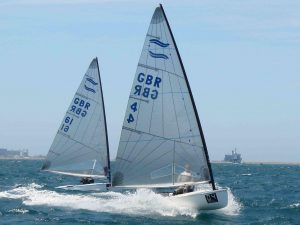
My life-long passion is sailing.
I sail an Olympic Finn class dinghy and have represented Britain at various World and European Championships.
I guess I wanted to get back to a really good standard again.
We have a fantastic World Masters’ series around the world and I’ll be taking part in Holland and racing there this year.
I wanted to have the flexibility of being able to do things I’m passionate about, so being a Non-Exec enables me to do that.
For me, life is life.
You do what you need to do; if I need to work, I do – if I don’t I’ll find time for something else.
Do you advocate that within your businesses?
A lot of people now want to work from home – and I always say as long as the job gets done, I certainly don’t want to have a Big Brother type attitude where you have to be at your desk, five days a week from 8-5, because if that’s not needed that’s fine.
Of course, it does depend on the role and I’m not saying people should just say, ‘Right I’m off sailing now’, but I think as long as people are adding value to what is needed then there should be flexibility.
You soon work out if someone is trying to pull the wool over your eyes, as opposed to someone who is willing to go the extra mile and put the effort in.
While you’re away travelling have you got a favourite book, podcast, TV series?
I listen to Planet Rock quite a bit.
Usually, if I’m away in a hotel then I’m often preparing for a board meeting, or I’m out at dinner.
I’m not a big telly addict but believe it or not my favourite TV show is Coronation Street.
When I got remarried, my wife was into Corrie and I used to joke about it, and then I actually started to watch it.
Corrie deals with things that are happening in life, but it always deals with it in the right way.
I find it interesting to watch it from that angle.
Are there any services/places you’ve been using that you’d recommend to your peers?
A lot of businesses still operate on spreadsheets and while they’re very good it doesn’t make for information sharing or quick accurate decision making.
So, one thing we’ve done in three of the businesses is complete system reviews, with the view to make them more integrated.
Cloud-based technology has helped reduce duplication and enables us to get the information quickly and accurately and if you really want to set the business up for growth you’ve got to be able to see and use the information quickly.
Executive Insight
Click here to view all of our Executive Insight series.
About the Author
Ex-military engineer, Craig Elvin has more than 15 years’ experience working with clients and placing leaders in a range of sectors across the UK, Europe, the Middle East and Africa.
Craig works with growing and ambitious businesses to attract, assess and nurture the best talent for critical leadership and senior managerial positions.
Latest Blogs
Leadership Communication: The Leadership Skill That Matters Most When Change Is Constant
Why Most Executive Interviews Fail – And the Cost Is Far Greater Than You Think
Upcoming Events
Executive to NED: Making the Move
18 / Sep / 2025
How to Build a More Valuable Business: The 8 Drivers That Increase Your Multiple
26 / Mar / 2026
Business Leaders Event: Turning Strategy into Action
25 / Jun / 2026
Creating a High-Impact Executive CV
14 / Aug / 2026

© 2026 EXECUTIVE HEADS
All rights reserved. Heads Resourcing Ltd.
Registered address: Fleming Court Leigh Road, Eastleigh, Southampton, Hampshire, SO50 9PD
Terms of use | Privacy Policy
Design by Pogo. Created By Arc.